
-
Product Description:
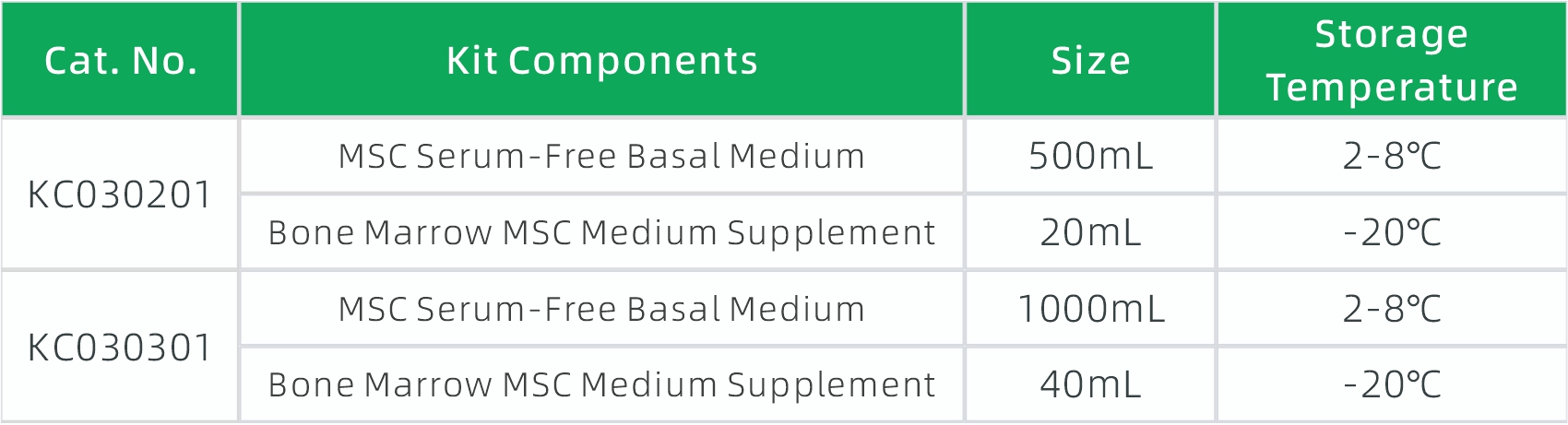
Bone Marrow Mesenchymal Cell Serum-Free Medium consists of a serum-free basal medium and a supplement. Mix to form a complete medium before use (antibiotic-free). Serum-free, xeno-free. Suitable for primary and subculture expansion of human and non-human primate bone marrow-derived mesenchymal stem cells and mesenchymal stromal cells.
Product Information:
Product Advantages:
Serum-free, xeno-free, compatible with phenol red (+/–)
Rapid cell proliferation, maintains stemness
Suitable for primary culture,no coating, low-density seeding
Suitable for large-scale production, supernatant collection
Low batch variation, IND-friendly
Broad applications
-
Product Analysis:
▼Microscopic observation of bone marrow mesenchymal stem cells:
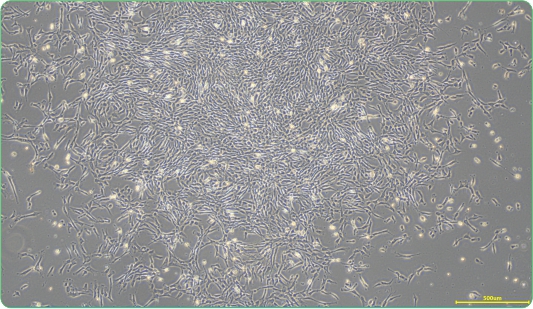
Under an inverted microscope at 4X objective, bone marrow mesenchymal stem cells exhibit typical colony morphology. The cells are adherent, displaying a uniformly elongated spindle shape.
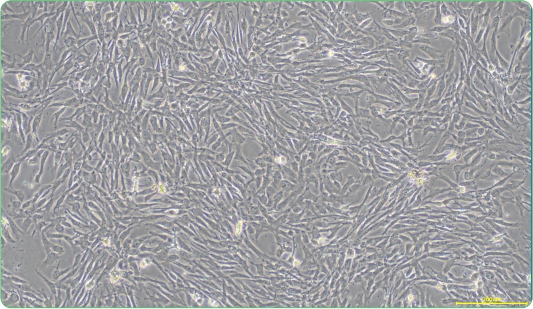
Under an inverted microscope at 10X objective, bone marrow mesenchymal stem cells are adherent and exhibit a uniformly elongated spindle-shaped morphology.
▼Flow cytometry immunophenotyping of bone marrow mesenchymal stem cells: positive markers > 95%, negative markers (sum) < 2%.
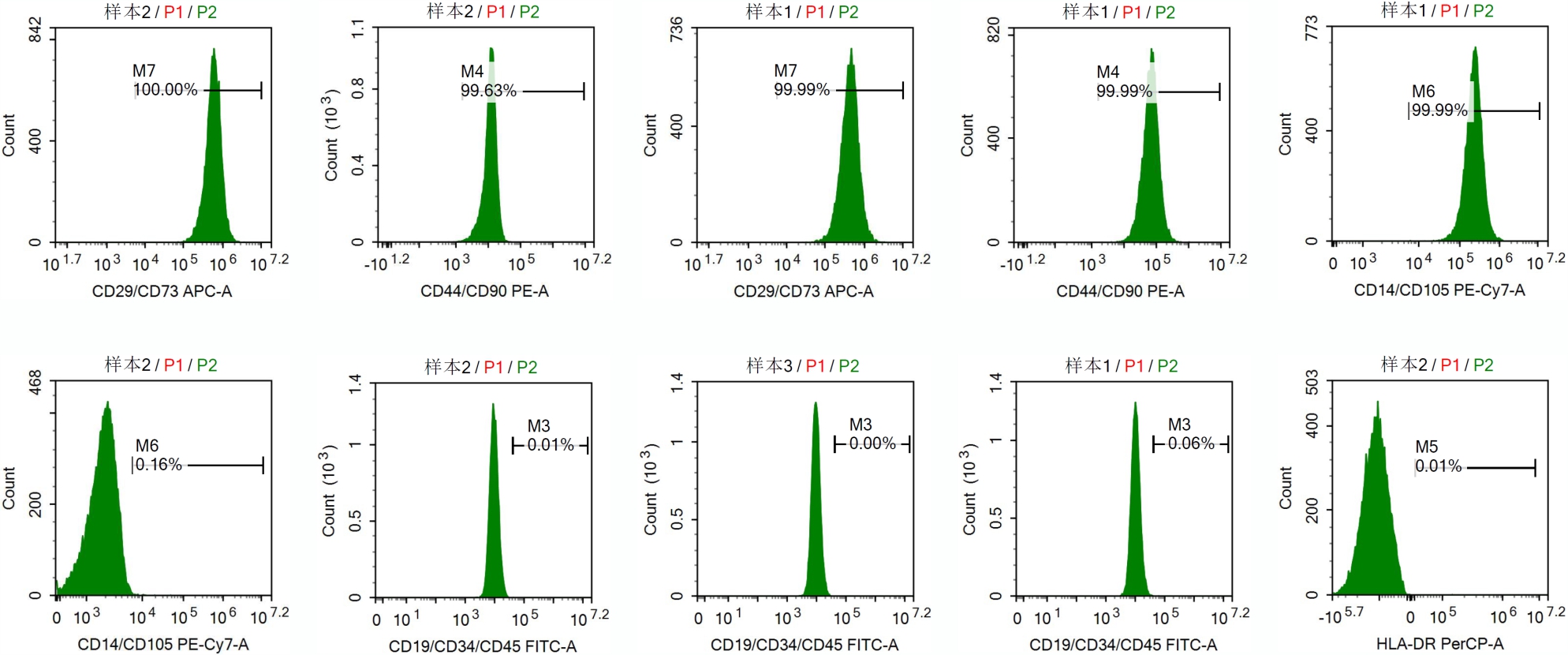
Cell surface markers:
CD29、CD44、CD73、CD90、CD105、CD14、CD19、CD34、CD45、HLA-DR
The positive rates are as follows:
100.00%、99.63%、99.99%、99.99%、99.99%、0.16%、0.01%、0.00%、0.06%、0.01%
-
-
Q: Does this medium support primary cell isolation?
A: Yes. This medium supports primary culture, passaging, and proliferation of bone marrow-derived mesenchymal stem cells (MSCs) and mesenchymal stromal cells.
Q: Is there a phenol red-containing version of this medium?
A: Yes. This product is available in two versions: with phenol red and without phenol red.
Q: How should I switch from my existing culture system to this medium?
A: You may switch directly during passaging. An initial temporary reduction in cell proliferation capacity may occur during the adaptation period. The time to reach 80–90% confluence may increase by approximately one day. No special treatment is required; simply continue with routine passaging.
Q: Why does a white, hazy film appear during cell culture?
A: This occurs when cell density is too high and excessive extracellular matrix is produced by the cells, forming a white film. It is recommended to passage cells when confluence reaches 80–90%. Alternatively, you may extend the trypsin digestion time slightly, and stop the digestion once the cells have dispersed into single cells.
-


 川公网安备51012202002100号