-
Product Description:
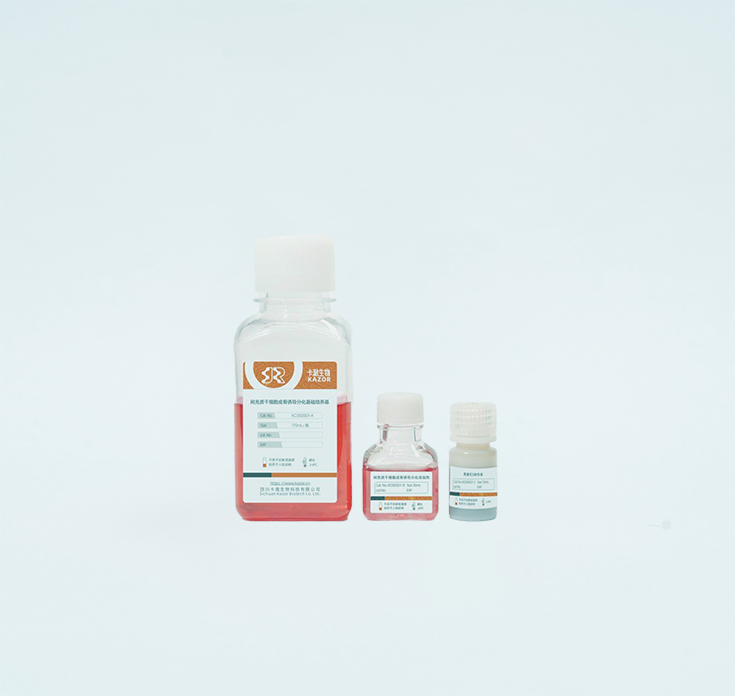
This osteogenic differentiation medium kit is suitable for MSCs from different sources (e.g., ADSCs, UC-MSCs, BMSCs). Under induction, calcium ions precipitate as calcium salts to form calcium nodules, which are stained deep red by Alizarin Red S (via a color reaction between Alizarin Red S and calcium), indicating osteogenic differentiation. The degree of differentiation can be assessed by the area and intensity of red staining.
Product Information:
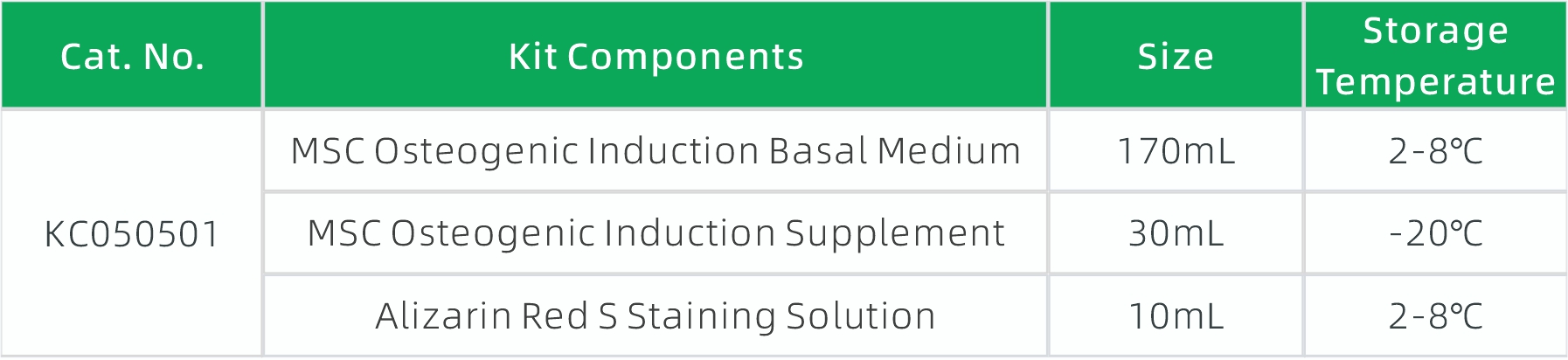
Product Advantages:
High-efficiency osteogenic induction
Suitable for MSCs from multiple sources
Strict quality control with precise and reliable
-
Product Analysis:
▼Osteogenic differentiation result analysis
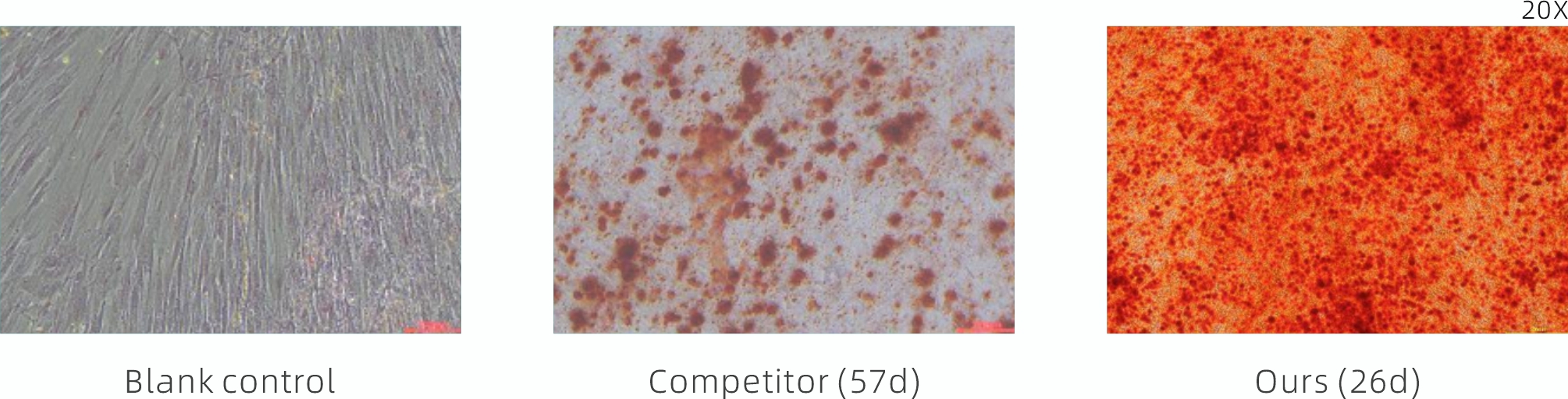
Large dark red stained calcium nodules are observed under the microscope, demonstrating the osteogenic capacity of MSCs.
▼Osteogenic differentiation quantitative analysis
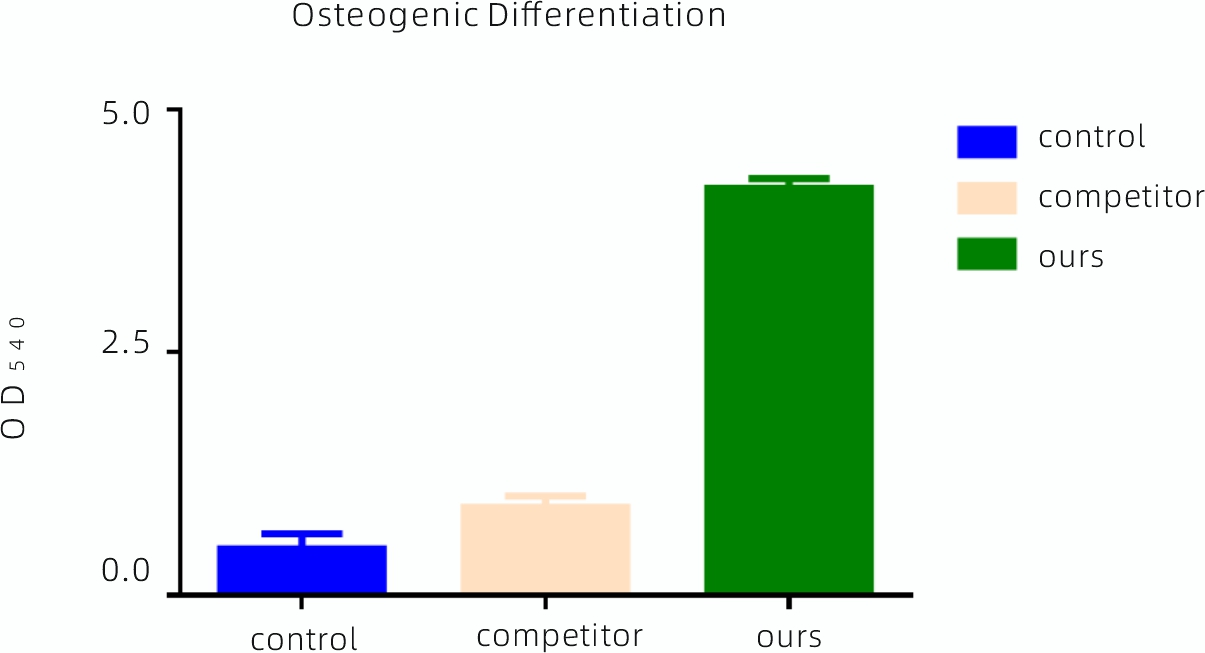
Microplate reader analysis of Alizarin Red S eluate showed that this product had higher OD values than competitors, demonstrating better osteogenic efficiency.
-
-
Q: Is it necessary to use gelatin solution for coating before induction?
A: Usually not. However, for cells that adhere weakly, gelatin coating can be used to enhance cell attachment during the induction process.Q: Why does Alizarin Red appear yellow in some wells, but red or purple in others?
A: Alizarin Red exhibits different colors depending on the pH, typically ranging from orange-yellow to purple. The Alizarin Red solution provided with our osteogenic induction medium has a pH of 4.2 and is generally yellow or red. During sample staining, due to environmental changes or acidic/alkaline substances produced by different samples, it is common for the stain to appear yellow, red, or purple. This is a normal phenomenon.Q: Is it necessary to add additional growth factors or induction factors during the induction process?
A: No, this product already contains all the factors required for the differentiation process. Simply mix the induction supplement thoroughly with the induction basal medium before use.Q: What is the initial cell seeding density for osteogenic induction using this product, and how many days of induction are required?
A: Under routine conditions, seed cells at a density of 5,000–8,000 cells/cm². Our internal test results show that after 26 days of induction, relatively large and deeply stained spots can be observed under the microscope. -


 川公网安备51012202002100号